

On this page
This is a supporting durability and ownership guide. For current Tesla solar-panel planning, start with Tesla Solar Panels Los Angeles. For Solar Roof transition information, use the Tesla Solar Roof Los Angeles transition page, and for historical pricing factors use the 2026 Solar Roof cost guide. Tesla has stopped public Solar Roof sales through its website, so any remaining 2026 project should be verified with Tesla before it is treated as an available installation path. This guide focuses on durability, service access, monitoring, sustainability and long-term roof strategy.
Key Takeaways
- Tesla Solar Roof combines roof replacement and solar production, making it most relevant when the existing roof is due for major work.
- Production depends on active tile placement, shade, roof orientation, utility rate plan, battery strategy, and home energy use.
- Warranty terms, durability ratings, and service responsibilities should be confirmed from current Tesla documents and the installation contract.
- Powerwall can improve backup readiness and solar self-consumption, but backup duration depends on selected loads, battery quantity, weather, and usage.
- For 2026 planning, verify SGIP, utility programs, financing, and tax treatment before relying on older incentive assumptions.
Eco-Friendly Solar Roof Planning Steps
Before requesting a quote, compare the Solar Roof path against a standard roof plus solar panels. This helps separate sustainability benefits from design preference, cost, backup goals and utility assumptions.
- Confirm roof age, roof condition, attic access, skylights, vents, gutters and visible damage.
- Gather 12 months of LADWP or SCE electric bills and note future loads such as EV charging or heat pump HVAC.
- Compare Tesla Solar Roof vs solar panels before choosing the roof system.
- Review Powerwall backup priorities using the Powerwall backup planning guide.
- Ask for a written scope that separates roof work, solar equipment, Powerwall, permits, utility steps, SGIP assumptions and exclusions.
Harnessing the Sun: Maximizing Energy with Tesla Solar Roofs

The Science of Solar: Capturing LA's Sunshine
Los Angeles has strong solar potential, but Solar Roof performance is still site-specific. A useful estimate should review roof planes, shade, active solar tile area, current utility bills, NEM 3.0 export assumptions, future EV charging, HVAC upgrades, and whether battery storage should be included. For the bigger picture, explore Los Angeles Solar Roof sustainability planning.- Roof-first planning: Review decking, underlayment, flashing, skylights, vents, and drainage before solar design.
- Energy modeling: Compare expected production with real household usage and utility rate plan details.
- Battery strategy: Decide whether the goal is essential-load backup, partial-home backup, whole-home backup, or load shifting.
Eco-friendly planning works best when roofing, solar, battery, HVAC, and utility rules are reviewed together instead of treated as separate projects.This is why homeowners should compare Solar Roof with solar panels, Powerwall storage, and roof replacement as separate scenarios before choosing the final scope.
Design Meets Function: Aesthetic and Energy Production
Tesla Solar Roof is a design choice as much as an energy choice. The strongest fit is usually a home that needs roof replacement and where the owner wants a lower-profile solar look. Design should account for visible roof planes, vents, skylights, ridges, valleys, active tile placement, and service access.The goal is a roof that protects the home first, then produces solar power safely and reliably from the active tiles.Solar Roof production depends on active tile placement, shade, roof orientation, roof pitch, utility rate plan, and home energy use. Software monitoring can help homeowners understand system behavior, but the estimate should still be based on site-specific modeling. Key factors to review:
- Sleek, lower-profile design
- Current warranty and service documents
- Powerwall backup and load-shifting goals
- NEM 3.0 and utility interconnection assumptions
The Tesla Edge: Continuous Improvements via Software Updates
Tesla monitoring and software updates can improve how homeowners interact with the system over time. The practical value is visibility into solar production, battery status, alerts, and energy behavior. Homeowners should still keep permit, warranty, utility approval, and service documents for long-term ownership.- Load planning: Include EV charging, HVAC upgrades, and future electric appliances in the design.
- Battery reserve: Choose backup settings based on outage priorities and daily usage.
- Monitoring: Use the app to review production, consumption, battery level, and alerts.
The system should be designed around actual loads, utility rules, and homeowner goals rather than generic assumptions.
Monitoring Magic: The Tesla App for Smart Energy Management

Real-Time Energy Tracking at Your Fingertips
The Tesla app can help homeowners monitor solar production, home consumption, battery state of charge, and outage behavior. That visibility is useful for understanding how roof production, Powerwall settings, EV charging, HVAC use, and utility rate periods interact.- Track solar production and home consumption
- Review Powerwall charge level and backup reserve
- Understand evening use under time-of-use rates
- Identify unusual production or usage patterns
The app is a monitoring and control tool. Actual savings and backup performance depend on system design, utility rates, weather, battery size, and household usage.
Remote Control: Energy Management on the Go
The Tesla app can provide remote monitoring and control, including solar production, home consumption, Powerwall status, and alerts. That information helps homeowners understand the system, but the result still depends on utility rate plans, settings, weather, and household behavior.- Monitor your solar energy production in real time
- Adjust settings to maximize energy independence
- Receive instant alerts and manage your system remotely
Remote monitoring is helpful for spotting unusual production or usage patterns, but service issues should still be handled through the proper installer or manufacturer support process.For homes with EV charging or heat pump upgrades, review those future loads before finalizing solar and battery sizing.
Customizing Your Energy Usage for Maximum Savings
Energy settings should be reviewed around utility rate plan, evening usage, backup reserve, and NEM 3.0 export values. For many Los Angeles homes, battery strategy matters as much as solar production.Use the app to understand how the home behaves, then adjust settings based on the approved system design and utility plan.Here's a quick rundown on how you can customize your energy usage:
- Monitor your solar energy production in real time.
- Adjust your consumption based on peak and off-peak rates.
- Share excess energy back to the grid during high demand.
- Receive instant alerts and manage your system remotely.
Built to Last: The Durability of Tesla's Solar Solutions

Weathering the Storm: Tesla's High Durability Ratings
Durability planning should be based on current Tesla specifications, roof design, underlayment, flashing, installation quality, and warranty documents. Homeowners should review wind, fire, hail, power, tile, waterproofing, and workmanship terms before signing.A Solar Roof is still a roof first. The project should protect the home, manage water correctly, meet code requirements, and support safe electrical integration.Before signing, ask for the current project documents that identify wind, fire and hail documentation for the selected system, along with waterproofing, warranty and workmanship responsibilities. Installation quality, flashing, underlayment, roof drainage, service access and inspection closeout are also part of long-term performance.
Warranty and Service Planning
Warranty terms should be reviewed against current Tesla documents and the project contract. Ask what is covered for solar tiles, non-active tiles, power components, waterproofing, workmanship, monitoring, and service calls. Before signing, confirm:- Which roof and energy components are covered, and for how long
- Who handles leak concerns, monitoring alerts, inverter issues, and battery service
- What documents you receive after permit final and utility approval
- How future roof access is handled for skylights, vents, repairs, or electrical work
A sustainable project should include clear service responsibility, not only product specifications.
Installation Planning and Contractor Coordination
Tesla Solar Roof requires roofing, electrical, battery, permit, inspection, and utility coordination. The homeowner should know who is responsible for each part of the project before work begins. A clear scope should explain roof preparation, tile installation, flashing, electrical routing, Powerwall equipment, inspections, utility interconnection, and activation.Home Upgrade Specialist is a Tesla Certified Premium Installer serving Los Angeles and Orange County under CSLB #1055444 for solar, roofing, and battery work.If the home may add a heat pump, EV charger, or panel upgrade, those loads should be reviewed during solar and battery design. A practical installation plan should include:
- Roof preparation, underlayment, flashing, and tile installation
- Electrical routing, Powerwall location, and backup-load planning
- Permit inspections, utility interconnection, monitoring setup, and closeout documents
Stylish Sustainability: Tesla Solar Roofs Complementing LA Homes

Elevate Your Home's Aesthetic with Solar Elegance
For many Los Angeles homes, the visual benefit of Solar Roof is strongest from the street. The system can create a lower-profile roofline than rack-mounted panels, but the final look depends on roof shape, active tile layout, vents, skylights, ridges, and service access.Aesthetic planning should happen at the same time as roof protection, solar production, and battery planning.Tesla Solar Roof should be compared as an integrated roof-and-energy system, not only as a design upgrade. Ask the proposal to document the current tile generation, active and inactive tile layout, warranty terms, roof-pitch requirements, wind documentation, fire documentation, hail documentation, underlayment, flashing and service-access plan.
| Review item | What the proposal should explain |
|---|---|
| Active tile layout | Which roof planes produce energy and what production assumptions were used |
| Roof assembly | Underlayment, flashing, penetrations, gutters, skylights and waterproofing responsibilities |
| Product documentation | Current warranty, fire, wind, hail and roof-pitch requirements for the selected system |
| Service access | How future roof, solar, battery and electrical service will be handled |
Virtual Consultations: Tailoring the Solar Experience
A useful Solar Roof consultation should translate the product into a buildable project plan. For LA homes, that means reviewing roof condition, electrical service, utility bills, shade, Powerwall goals, HVAC plans, EV charging, permitting, and incentive assumptions. Here's what to prepare before the consultation:- Recent electric bill and utility account information
- Roof photos, attic notes, skylight and vent locations
- Main electrical panel photos and EV charger plans
- Backup-load priorities for Powerwall sizing
The goal is to compare realistic options before committing to a Solar Roof, a standard roof plus panels, or a phased approach.
The Integration of Solar and Energy Storage Systems
Pairing Solar Roof with Powerwall can improve solar self-consumption and backup readiness when the battery is sized correctly. The right battery plan depends on selected loads, outage goals, solar recharge, utility rates, and household usage.Battery storage should be modeled around the home, not added as a one-size-fits-all accessory.A well-designed system may support essentials during an outage and shift stored solar into evening hours, depending on the backup configuration.
- Store solar energy for later use
- Improve self-consumption under time-of-use rates
- Support selected loads during outages when designed for backup
Energy Independence: Powerwall as the Backbone of Home Resilience
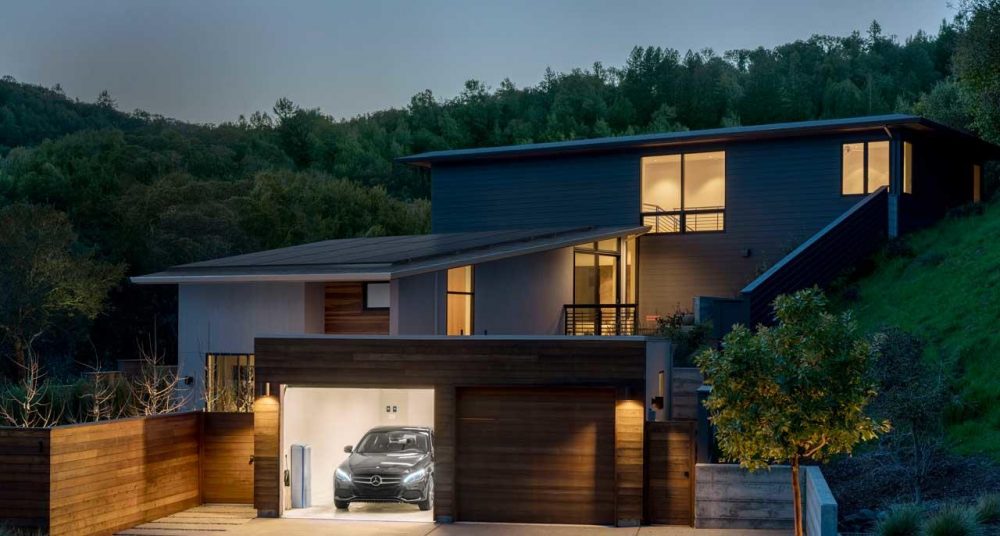
24/7 Energy Security with Tesla Powerwall
Powerwall can support selected home loads when the system is designed for backup. Backup duration depends on battery quantity, solar recharge, weather, selected circuits, HVAC use, EV charging and household behavior. For current planning, review the Powerwall backup planning guide and the Tesla Gateway and backup load panel guide.- Backup scope: Decide essential loads, partial-home backup, or whole-home backup if feasible.
- Future loads: Include EV charging, heat pumps, and other electric appliances in the design.
- Monitoring: Use the Tesla app to understand production, consumption, and battery reserve.
Powerwall should be sized around real priorities and electrical loads, not generic backup claims.
Outage Protection: Keeping the Lights On When the Grid Goes Down
During an outage, a properly designed Powerwall system can automatically switch to backup mode and support the circuits included in the backup design. That does not mean every appliance is always covered. The design should identify the loads that matter most.Backup planning should be discussed before installation, especially for HVAC, medical equipment, refrigerators, internet, garage doors, and EV charging.A Powerwall backup design should explain what happens during an outage:
- Which circuits are protected and which are excluded.
- How battery reserve, solar recharge and weather can affect runtime.
- Whether HVAC, EV charging, pool equipment or medical loads are included in the approved design.
Seamless Solar Storage: Powerwall's Technical Prowess
For solar storage, Powerwall can store energy for later use and help manage evening demand. It is most useful when the design is matched to the home's rate plan, solar production, backup priorities, and daily load profile.Storage value depends on how the home actually uses energy, not just battery capacity.Here's a quick rundown of what makes Powerwall stand out:
- Capacity: Compare battery quantity against daily usage and backup priorities.
- Backup power: Confirm which circuits or loads are included in the backup design.
- Scalability: Review electrical capacity, equipment locations, and future expansion options.
- Monitoring: Use the Tesla app to review production, consumption, and reserve settings.
Before Your Eco-Friendly Solar Roof Estimate
Before choosing Tesla Solar Roof, gather a recent electric bill, roof photos, attic notes, electrical panel photos, backup-load priorities, EV charging plans, and HVAC upgrade plans. Then compare Tesla Solar Roof vs solar panels, roof replacement before solar, home battery estimate planning, NEM 3.0 solar battery planning, and solar and battery financing questions.
Home Upgrade Specialist: Los Angeles solar, roofing, battery and HVAC: Tesla Solar Roof · Tesla Powerwall · Roofing contractor Los Angeles · Heat pump installation · HVAC, solar, roofing and battery company · Free estimate · (833) 446-6387.
More Solar Roof and battery planning guides
- Roof replacement before solar by roof age
- LADWP vs SCE solar battery planning
- Solar and battery financing questions
- Powerwall 3 vs Enphase IQ Battery
Frequently Asked Questions
What makes Tesla Solar Roof unique for energy production?
Tesla Solar Roof integrates solar-producing tiles into the roof surface. Production depends on active tile placement, roof orientation, shade, utility rules, battery strategy, and household usage.How does the Tesla app enhance the management of my solar energy system?
The Tesla app allows for real-time energy monitoring and system control from anywhere. It provides instant alerts and remote access, enabling you to optimize your energy usage for efficiency, savings, or energy independence.What warranty details should I review?
Review current Tesla documents and the installation contract for tile, power, waterproofing, workmanship, monitoring, and service terms. Also confirm who handles future service and roof access.Can Tesla Solar Roofs improve the aesthetic of my home?
Yes, Tesla Solar Roofs are designed to complement your home's aesthetic with their sleek and elegant appearance. They look great up close and from the street, enhancing your home’s natural styling.What is the role of Tesla Powerwall in home energy resilience?
Tesla Powerwall stores solar or grid energy for later use and can support selected loads during outages when designed for backup. Backup duration depends on battery quantity, selected circuits, solar recharge, weather, and usage.Are there incentives or rebates for Tesla Solar Roof and Powerwall in 2026?
For 2026 projects, confirm current tax treatment with a tax professional before relying on federal tax-credit assumptions. SGIP, utility programs, manufacturer promotions, and financing may apply only when the project, customer, equipment, utility territory, and timing meet program rules. Review Los Angeles rebate stacking before signing. Home Upgrade Specialist is not a tax advisor.Plan your home energy project with one team
Compare scope, equipment and utility rules in a single written plan built around your address.
Start My Home Plan