
On this page
What changes the estimate?
Homeowners comparing quotes for air handler installation Los Angeles often notice that estimates can vary more than expected. That is normal. An air handler is not a one-size-fits-all component, and final pricing depends on the home, the existing HVAC setup, the equipment selected, and the amount of labor needed to complete the job safely and up to code. In Los Angeles and Orange County, local access conditions, permit requirements, and utility coordination can also affect the project scope.
Home Upgrade Specialist is a licensed Southern California HVAC contractor serving Los Angeles and Orange County. For homeowners reviewing an HVAC estimate Los Angeles, it helps to understand which variables usually increase or decrease the total. Final recommendations should follow an in-home or virtual assessment, because exact costs are project-specific.

What affects air handler installation cost?
The biggest cost drivers usually start with equipment size and compatibility. A larger home may require a different capacity, airflow rating, or configuration than a compact condo. Horizontal, vertical, and multi-position air handlers can involve different installation steps depending on where the unit will sit and how the ducts connect.
Another major factor is whether the job is a straightforward replacement or part of a larger system upgrade. If the air handler is being paired with a new outdoor condenser or a heat pump installation Los Angeles, the scope may include refrigerant line evaluation, control upgrades, condensate management, and commissioning. That can increase labor, but it may also improve system performance when the equipment is matched correctly.
Cost-factor checklist
- Unit size, efficiency tier, and brand
- Airflow requirements and static pressure conditions
- Heat pump air handler versus conventional AC pairing
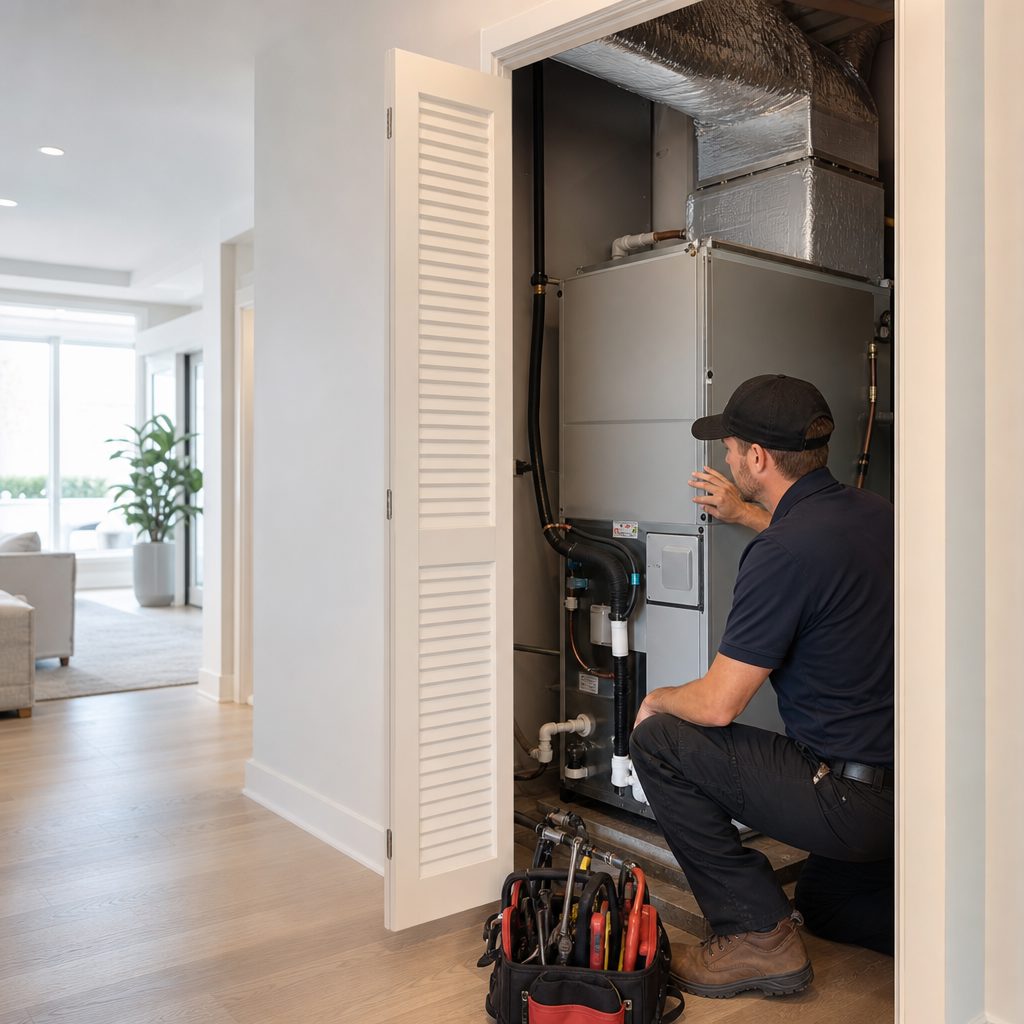
- Closet, attic, garage, or crawlspace access
- Duct transitions, sealing, and insulation needs
- Electrical upgrades, breakers, or disconnect work
- Drain pan, condensate line, float switch, and safety items
- Permit requirements and inspection scheduling
- Removal of old equipment and code corrections
When should an air handler be replaced?
Many homeowners ask about air handler replacement cost only after comfort problems become obvious. Common warning signs include weak airflow, repeated repairs, blower motor issues, water leaks around the unit, unusual noise, rust, or inconsistent temperatures from room to room. In some homes, the air handler may still run, but it no longer matches the outdoor equipment well enough to deliver expected efficiency or humidity control.
Age matters too. If the system is older and major components are failing, replacement may make more sense than continued repairs. This is especially true when a new outdoor unit is being considered. A mismatched indoor section can limit performance, increase wear, or complicate warranty coverage. Homeowners comparing furnace vs air handler options should also consider fuel type, duct layout, and whether a future electrification plan includes a heat pump.
How ductwork and electrical access affect scope
Ductwork changes are one of the most overlooked reasons an estimate shifts. In theory, replacing an indoor unit sounds simple. In practice, the new cabinet dimensions may not line up with existing plenums or return boxes. Contractors may need to fabricate transitions, seal connections, improve support, or address damaged insulation. If the old installation has airflow restrictions, correcting them may be recommended as part of the job rather than leaving a known issue in place.
Electrical conditions matter just as much. Some replacements need a new disconnect, breaker adjustment, control wiring, or upgraded circuit protection. If the air handler includes electric heat strips, power requirements can be significantly different from a basic blower-only setup. Homeowners comparing electric heating should also review gas furnace to heat pump planning. Access also changes labor. An easy garage installation is usually more predictable than an attic platform in a tight Los Angeles home with limited clearance and older framing.

Why matching equipment matters
Matching matters because HVAC systems are designed to work as coordinated assemblies. The indoor coil, blower, controls, and outdoor unit should be selected together whenever possible. A mismatch can reduce efficiency, create airflow problems, affect dehumidification, or lead to service issues later. That is one reason estimates may include model-specific recommendations instead of simply swapping the old unit for the cheapest available replacement.
This becomes even more important with inverter systems and heat pumps. A modern heat pump air handler may use variable-speed technology, communicating controls, and accessory settings that need proper configuration. Homeowners exploring broader upgrades can review HVAC services in Los Angeles to see how indoor and outdoor components are evaluated together.
What homeowners should ask before approving an estimate
Before signing, ask what is included and what is conditional. Homeowners should confirm whether the quote covers permit handling, haul-away, thermostat compatibility, drain safety devices, startup testing, and any duct or electrical corrections discovered during installation. It is also smart to ask whether the proposed equipment is matched, what warranty terms apply, and whether access limitations could create additional labor once work begins.
For Los Angeles homes, asking about code compliance is especially important. Older installations may lack current safety items or may not meet present best practices for condensate overflow protection, support, insulation, or electrical disconnect placement. A detailed estimate should explain these items clearly and avoid vague line items wherever possible.
Quick FAQ
Is air handler replacement cost the same in every home?
No. Access, system size, electrical conditions, and ductwork can change the estimate significantly.
Does a heat pump air handler cost more to install?
It can, especially if controls, refrigerant components, or electrical requirements differ from the existing setup.
Should I replace the air handler when replacing the outdoor unit?
Often yes, but not always. A contractor should verify compatibility, condition, and performance goals first.
Start your HVAC estimate with a licensed local team
Home Upgrade Specialist, CSLB #1031989, serves Los Angeles and Orange County. For project-specific recommendations on an air handler or heat pump upgrade, request a Free Estimate or call (833) 446-6387.
Get a Free EstimatePlan your home energy project with one team
Compare scope, equipment and utility rules in a single written plan built around your address.
Start My Home Plan