
On this page
Direct answer: which HVAC system usually fits Los Angeles homes?
For many homeowners in Los Angeles and Orange County, a heat pump is often a strong choice because it can both heat and cool from one system, works well in Southern California’s mild climate, and supports all-electric upgrade plans. A furnace can still make sense, especially in homes that already have gas service, suitable ductwork, or budget priorities that favor a more traditional setup. An air handler is different from both. It is not the heat source in the way a furnace is. Instead, it is the indoor unit that moves conditioned air through the duct system and is commonly paired with a heat pump or central AC system.
If you are comparing these options for replacement or first-time installation, the best choice depends on more than equipment labels. Home layout, duct condition, insulation, return-air design, electrical capacity, noise expectations, and long-term remodeling plans all matter. Home Upgrade Specialist serves Los Angeles and Orange County with licensed guidance, including HVAC under CSLB #1031989 and related whole-home planning under CSLB #1055444 for solar, roofing, and battery work when relevant.
The short version is simple. If your goal is year-round comfort with one all-electric system, a heat pump with an air handler may be a strong fit. If your home already relies on gas heat and you prefer to stay with that type of heating, a furnace may still be appropriate. Final recommendations should always follow an in-home or virtual assessment.
What each system does in plain English
Homeowners often hear these terms used together, which can make the comparison confusing. The easiest way to think about them is to separate the heating source from the air-moving equipment.
- Air handler: the indoor cabinet with the blower fan, filter area, coil, and controls that circulates air through the ducts.
- Furnace: the heating appliance that creates heat, usually by burning natural gas, then pushes warm air through the home.
- Heat pump: the outdoor and indoor system that transfers heat for both cooling and heating instead of creating heat through combustion.
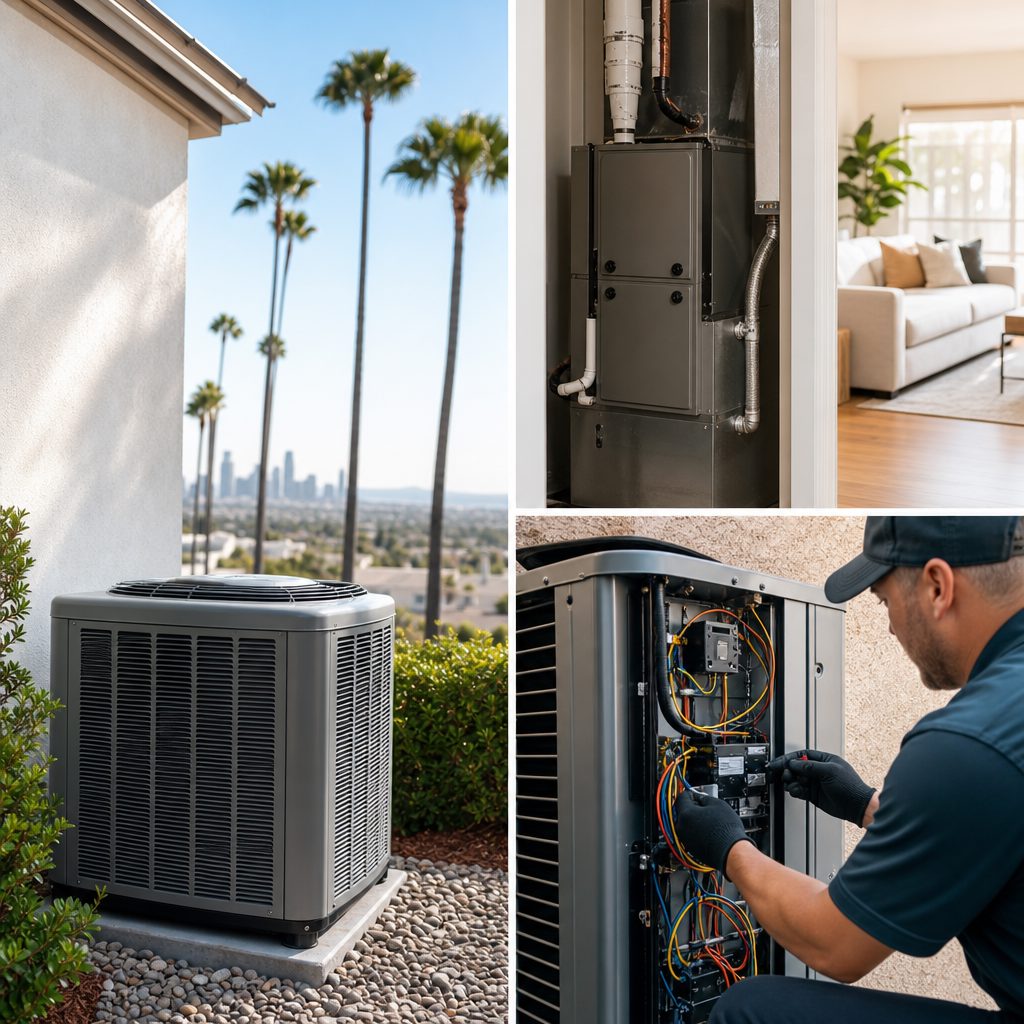
In Los Angeles homes, air handlers are commonly paired with heat pumps and central air systems. They may be located in an attic, closet, garage, or utility area depending on the home. If you want more detail on indoor equipment, visit air handler installation in Los Angeles.
That distinction matters because “air handler versus furnace” is not always the full question. Often, the real decision is whether to stay with gas heat, move to an all-electric heat pump, or evaluate compatibility between existing indoor and outdoor components.
How an air handler differs from a furnace
A furnace and an air handler may both move air, but they are not interchangeable. A furnace includes a heat source. It raises the air temperature and then distributes that air through the ducts. An air handler focuses on airflow. It usually works with an outdoor condenser or heat pump and an indoor coil to deliver conditioned air throughout the house.
This is important when a homeowner says, “I need a new furnace,” but the home may actually have an air handler connected to a heat pump or straight AC system. Replacing the wrong component, or assuming compatibility without checking model matches, can lead to performance issues, control problems, or avoidable extra work later.
If you are trying to lower gas use, an air handler often becomes part of the conversation because many ducted heat pump systems use one indoors. If you are staying with gas heat and central AC, the indoor equipment may instead center around a furnace and evaporator coil combination.
Where heat pumps fit in Southern California
A heat pump can cool in summer and heat in winter by moving heat rather than creating it through combustion. In Los Angeles, that approach often aligns well with the local climate because severe cold is less common than in many parts of the country. For that reason, many homes are good candidates for a ducted heat pump with an air handler.
Heat pumps also fit broader upgrade goals. Homeowners planning solar, battery storage, an EV charger, service panel work, or a larger electrification strategy may prefer to evaluate HVAC as part of the whole house rather than as a stand-alone appliance swap. That does not mean every home should switch immediately, but it is a practical planning conversation.
- Works for both heating and cooling
- Often suits mild Los Angeles winters
- Can support all-electric planning
- Needs proper sizing, airflow, and duct design
Learn more about heat pump installation in Los Angeles if you want to compare ducted electric options in more detail.
When replacement makes sense
Replacement may make sense when your current equipment is old, noisy, expensive to repair, poorly matched, or no longer delivers even comfort. In Los Angeles, many HVAC replacement projects happen alongside insulation upgrades, roofing work, remodels, ADUs, panel upgrades, or plans to reduce gas use.
Replacement should not be based on age alone. A proper quote should review Manual J sizing, airflow, return paths, thermostat compatibility, permit needs, and whether the existing ducts are worth keeping, sealing, modifying, or replacing.
Decision criteria, compatibility, and estimate checklist
Before choosing between an air handler, furnace, or heat pump, ask the contractor to explain how the recommendation matches your actual home. Useful decision points include:
- Has the system been sized with Manual J principles instead of simply matching the old tonnage?
- Are the existing ducts large enough, sealed well, and in good condition for the new airflow requirements?
- Will an all-electric system require panel capacity review or circuit upgrades?
- Are the indoor and outdoor units a matched system approved to work together?
- Will permits, utility considerations, financing on approved credit, or rebate research be part of the written scope?
Photos and documents to gather before a quote
- Photos of the current indoor unit, outdoor unit, thermostat, duct connections, and electrical panel
- Model numbers if visible
- Recent utility bills for usage context
- Any plans for roofing, solar, battery, EV charging, or remodel work
- Notes about hot rooms, weak airflow, noise, dust, or comfort issues by room
For broader guidance, visit HVAC services in Los Angeles. If you are ready to compare equipment options against your home’s layout and goals, request an HVAC estimate in Los Angeles.
FAQ for Los Angeles homeowners
Is an air handler the same as a furnace?
No. A furnace produces heat. An air handler mainly moves air and usually works with a heat pump or AC system.
Are heat pumps practical in Los Angeles?
Yes. Many homes in Los Angeles are good candidates because the climate is relatively mild, but design, ductwork, insulation, and electrical planning still matter.
Can I replace only one component?
Sometimes, but partial replacement should be checked carefully. Matched indoor and outdoor equipment often performs better and can simplify controls and service.
What should be included in a good proposal?
A written scope, equipment details, sizing approach, permit plan, duct recommendations, electrical review if needed, and any utility or rebate research that may apply.
Need help comparing air handler, furnace, and heat pump options?
Home Upgrade Specialist serves Los Angeles and Orange County with licensed HVAC guidance under CSLB #1031989 and whole-home upgrade planning under CSLB #1055444 where relevant. Final recommendations require an in-home or virtual assessment.
Related pages: Air Handler Installation | Heat Pump Installation | HVAC Services | HVAC Estimate
Call (833) 446-6387 or schedule a free estimate to compare system types, duct needs, and electrical planning for your home.
Start your HVAC estimatePlan your home energy project with one team
Compare scope, equipment and utility rules in a single written plan built around your address.
Start My Home Plan