
On this page
Two ways to start with HUS
Choose the fastest path for your project. Both options keep the existing HUS HVAC planning process intact.
Quick HVAC request
Ready to talk about an installation, replacement or comfort problem? Start the HVAC estimate and provide the basic project details.
Start My HVAC RequestBuild a detailed HVAC plan
Use the HUS Planner to compare the system type, scope and project details before the final site-specific proposal.
Build My HVAC PlanSubmitting an estimate request does not confirm a repair or installation appointment. For repair or diagnostic availability, call (833) 446-6387.
How to decide mini-split zone count before installation
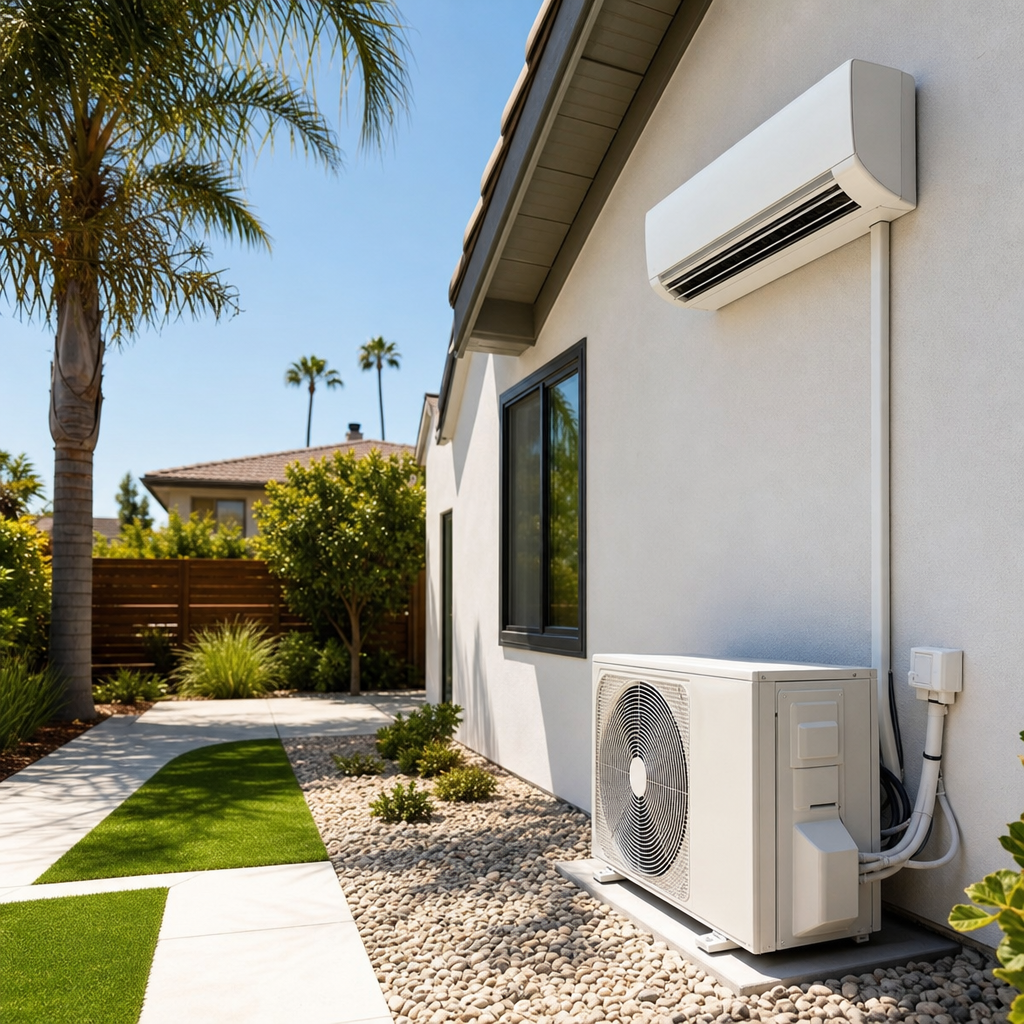
Ductless mini split installation in Los Angeles often makes sense when a home needs efficient heating and cooling without the cost or disruption of adding full ductwork. These systems use an outdoor unit and one or more indoor air handlers, which can condition specific rooms or zones. In Southern California, that flexibility can be useful for homes with varied sun exposure, inconsistent comfort between rooms, or spaces that are used differently throughout the day.
Mini splits are especially worth considering for room additions, converted garages, ADUs, older homes without existing ducts, and houses where one area is always warmer or cooler than the rest. Homeowners exploring ductless mini split installation in Los Angeles usually want targeted comfort, cleaner installation paths, and modern heat pump performance.
Because every property is different, the best setup depends on insulation, layout, electrical capacity, local permitting requirements, indoor air quality goals, and whether existing ductwork problems should be fixed instead. LADWP customers should also review the current LADWP heat pump and mini-split rebate guide before selecting equipment because eligibility depends on the exact AHRI match, efficiency tier, permits, documents, funding and utility approval. Final recommendations should come from an in-home or virtual assessment.

Ductless vs central AC: start with the Los Angeles AC guide
If the project might become whole-home cooling, compare ductless zoning with licensed AC installation in Los Angeles, AC installation cost in Los Angeles, heat pump rebate planning and permit/HERS requirements before choosing equipment.
What types of homes benefit most from mini splits?
In Los Angeles and Orange County, mini splits are often a practical fit for homes that were not designed around central forced air. They can also help homeowners avoid over-conditioning the entire house just to make one area comfortable.
How do single-zone and multi-zone mini splits differ?
A single-zone mini split connects one outdoor unit to one indoor unit. This is common for a bedroom, garage conversion, sunroom, or detached office. It is usually the simplest ductless configuration and may work well when there is one problem area.
A multi-zone system connects one outdoor unit to several indoor heads. That setup can make sense when multiple rooms need independent control. For example, a family might want one temperature in the primary bedroom, another in upstairs bedrooms, and a different setting in a home office.
Even though multi-zone systems sound convenient, more indoor units do not automatically mean better results. Capacity matching, line-set routing, and controls should be planned carefully. An oversized or poorly placed system can short cycle, while an undersized one may struggle during peak heat.
Homeowners comparing options may also want to review heat pump installation in Los Angeles, since mini splits are a type of heat pump and may be part of a broader electrification plan.

Mini split decision checklist
A ductless mini split may be a strong option if several of these apply:
- You have a room addition, ADU, or converted garage.
- Your older home does not have ducts, or adding them would be invasive.
- One area of the house is regularly uncomfortable.
- You want room-by-room control instead of one thermostat for all spaces.
- Your current central system does not serve a specific room well.
- You are considering an HVAC upgrade and want a targeted solution first.
If your home needs whole-house replacement, compare ductless options with air conditioning installation in Los Angeles or a central heat pump system.
What about sizing, placement, electrical work, and permits?
Proper sizing is one of the most important parts of a successful installation. Contractors should evaluate square footage, ceiling height, insulation levels, window area, orientation, and how the room is actually used. A quick rule of thumb is not enough for final equipment selection.
Placement matters too. Indoor heads should allow good airflow across the room and should not be blocked by cabinetry, beams, or furniture. Outdoor units need adequate clearances, service access, and a location that considers noise, drainage, and appearance.
Many mini split projects also require electrical upgrades or a dedicated circuit. In Los Angeles, permit requirements can vary by jurisdiction and project scope. Homeowners should verify whether local approvals are needed and whether HOA guidelines apply. A licensed contractor can help identify those requirements before work begins.
Mini split estimate prep checklist
Before approving a ductless mini split proposal, gather a few details so the contractor can compare single-zone, multi-zone, and central options accurately.
- Photos of the room, exterior wall, electrical panel, and possible outdoor unit location.
- Notes on hot rooms, cold rooms, noise sensitivity, allergies, humidity, or uneven airflow.
- Whether the space is an ADU, garage conversion, home office, bedroom, addition, or detached structure.
- Plans for future heat pump and solar upgrades, battery backup, or EV charger installation that could affect electrical planning.
- Questions about local mini split service pages, including Santa Monica mini split installation and Beverly Hills mini split installation.
A good estimate should explain equipment size, indoor head placement, line-set routing, condensate drainage, electrical scope, permits, and what happens after startup testing.
For a deeper scope checklist, review the Daikin ductless mini split scope, airflow balancing and zoning scope, electrical panel and load review, and HVAC permits and HERS testing checklist.
How much maintenance do mini splits need, and when is central better?
Mini splits are not maintenance-free. Filters should be cleaned regularly, condensate drains should stay clear, and the system should be professionally inspected on schedule. Outdoor units also need unobstructed airflow. Good maintenance supports performance, indoor air quality, and equipment life.
A central heat pump may be the better choice when the entire home needs even conditioning, existing ducts are in good shape, or a homeowner prefers one integrated whole-house system. Larger homes with many small rooms may also be better served by central equipment, depending on layout and comfort goals.
Home Upgrade Specialist serves Los Angeles County and Orange County with HVAC work under CSLB #1031989 and solar, roofing, and battery work under CSLB #1055444. Final system recommendations, costs, and timelines are always project-specific. For personalized guidance, request a Free Estimate or call (833) 446-6387.
FAQ
Are mini splits good for garages?
Yes, they can be a practical option for conditioned garages or garage conversions when insulation and electrical service are appropriate.
Can a mini split cool the whole house?
Sometimes, but not every layout is ideal for ductless whole-home coverage. A multi-zone design or central heat pump may be more suitable.
Do I need a permit?
Many installations do require permits, but requirements vary. Your contractor should verify local rules before installation.
Can a mini split satisfy the heating requirement for a Los Angeles ADU?
Yes, California's 2025 Energy Code guidance specifically recognizes mini-split and multi-split systems for ADUs, but the equipment and the project still have to meet the applicable code requirements. A new detached ADU, a conversion of existing conditioned space, and legalization of previously unpermitted work can follow different compliance paths. If unpermitted work is being permitted now, the California Energy Commission says the applicable current Energy Code requirements must be addressed.
Depending on scope, mini-splits can require ECC-rater field verification and diagnostic testing, including items such as verified efficiency, heating capacity, airflow, refrigerant charge, or duct testing for ducted systems. Do not assume that a particular BTU size automatically legalizes an ADU or satisfies every permit requirement.
Already bought a mini split online?
Have the exact indoor and outdoor model numbers reviewed before installation. Customer-supplied equipment still has to match the home's load, voltage and circuit requirements, line-set requirements, condensate routing, clearances, permits, Energy Code obligations, and manufacturer installation instructions. Refrigerant work that could release refrigerant, including opening the circuit or adding or removing refrigerant, requires a technician with the applicable EPA Section 608 certification. The written agreement should also separate installation workmanship responsibility from the manufacturer's equipment warranty and state what happens if customer-purchased equipment arrives damaged, incomplete, incorrectly sized, or incompatible.
Hot upstairs, comfortable downstairs? Compare the system before replacing everything
A hot second floor does not automatically mean the whole central system needs a larger replacement. Compare the existing duct and return-air system, properly designed zoning, a concealed ducted mini-split serving several upstairs rooms, and individual or multi-zone indoor units after room-by-room loads and installation paths are reviewed.
Interior routing for refrigerant piping and wiring can sometimes be possible through an attic, chase, closet, or opened wall, but it should not be promised from photos alone. Condensate drainage is a separate design question and must be planned for reliable drainage and future service access.
Mini split leaking water?
Condensate during cooling is normal, but water entering drywall, stucco cavities, ceilings, or floors is not. A technician should evaluate the full drainage path before assuming a hidden line needs replacement. A restriction, poor slope, failed connection, drain-pan issue, airflow problem that contributes to icing, or condensate-pump issue can produce similar symptoms. If water is actively damaging finished surfaces or the source cannot be identified safely, stop using the affected system as appropriate and arrange service.
Get an HVAC estimate for your Los Angeles home
Not sure whether a ductless mini split or central heat pump makes more sense? Home Upgrade Specialist can review your layout, comfort needs, and installation requirements.
Request a Free EstimateOr call (833) 446-6387.
Customer-supplied mini-splits and concealed ducted options
Can I buy the mini-split myself and pay only for installation?
Potentially, but have the installer review the exact equipment before purchase. The outdoor and indoor units must be a compatible match, and the project still needs the correct voltage, disconnect and circuit, line-set sizes and lengths, condensate route, mounting, controls, refrigerant procedure, permit path and applicable Energy Code verification. Warranty responsibility should also be written clearly because equipment supplied by the homeowner and installation labor may have different warranty paths.
What if the upstairs is hot but the downstairs is comfortable?
A whole-house replacement is not always the only option. Depending on loads, attic access and duct routing, an upstairs area may be evaluated for wall-mounted heads or a concealed ducted mini-split that serves selected rooms. The design should account for room-by-room loads, indoor-unit location, return path, condensate drainage, service access and how refrigerant and control wiring will reach the outdoor unit.
Can a mini-split be used in an ADU?
Mini-splits are commonly considered for ADUs, but the correct compliance path depends on whether the project is new construction, an addition, a conversion or a legalization. California's 2025 Energy Code can require equipment and field verification items depending on project scope. Review the current California Energy Commission ADU guidance before final equipment selection.
Plan your home energy project with one team
Compare scope, equipment and utility rules in a single written plan built around your address.
Start My Home Plan