A new AC or heat pump is only as good as the ducts that deliver the air. Leaky, undersized or poorly routed ducts cause hot rooms, dust and high bills no matter how good the equipment is. Here's how ductwork really works — and when to seal, resize or replace. For service and a project estimate, use our Los Angeles air duct replacement and sealing page.
Reviewed by Los Angeles & Orange County homeowners
Ductwork is the delivery network that carries conditioned air from the equipment to every room and returns it to be re-conditioned. When ducts leak, are too small, or are poorly laid out, even a perfectly sized, high-efficiency system can't do its job. A large share of comfort complaints we see trace back to ducts — not the AC or furnace.
Duct systems lose conditioned air through gaps at joints, disconnected sections, and poorly sealed boots. In many homes those leaks dump a meaningful share of your heated or cooled air into unconditioned space. Sealing the joints (with mastic, not just tape) and insulating runs that pass through hot attics keeps the air where you want it — in your living space. It's one of the highest-return improvements you can make alongside a new system, and a big reason a right-sized system from our Manual J guide actually delivers its rated performance.
In California, many HVAC installs require HERS testing: a certified rater measures duct leakage and verifies refrigerant charge to confirm the system meets Title 24 energy standards. When ducts are altered or replaced, that testing matters even more. We pull the permit and coordinate HERS testing as part of a compliant install — keeping the work documented for resale.
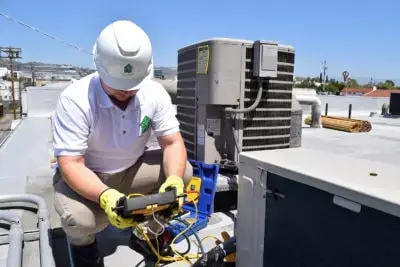
We measure airflow and static pressure, find leaks, and tell you honestly whether to seal or replace — before recommending equipment.
Tell-tale signs include rooms that never match the thermostat, weak airflow from some vents, rising energy bills, excess dust, and whistling or roaring near registers. These usually point to leaky, undersized or poorly routed ducts rather than the equipment itself.
It depends on condition and design. Ducts in sound shape often just need sealing, insulating and minor reworking. Ducts that are crushed, disconnected, badly undersized, contaminated or beyond their service life are better replaced. We inspect and measure before recommending either.
Yes. Typical duct systems can lose a meaningful share of conditioned air through leaks, often into the attic or crawlspace. Sealing and insulating ducts improves comfort, lowers bills and helps a right-sized system perform as designed.
In California, many HVAC installs require HERS testing, where a certified rater measures duct leakage and verifies refrigerant charge to confirm the system meets Title 24 energy standards. We coordinate the testing as part of a permitted install.
Not always. Some homes reuse existing ducts after sealing and minor rework; others need resizing or replacement to match a new system's airflow. Older homes with no ducts are often best served by a ductless mini-split. We confirm with an inspection and a Manual D review.
