

On this page
If your Los Angeles or Southern California home needs a full roof replacement and you also want solar generation with battery backup, compare the current Tesla Solar Panels Los Angeles path with a solar-ready roof and Powerwall. For Solar Roof transition information, use the Tesla Solar Roof Los Angeles transition page, and use the separate 2026 Tesla Solar Roof cost guide for historical pricing factors and comparisons. This supporting article is retained for historical design reference, existing-owner context and previously approved project planning. It focuses specifically on active and inactive tile layout, roof geometry and Powerwall design rather than current new-project availability. Unlike a standard panel system that mounts above shingles or tile, Tesla Solar Roof replaces the roof itself with glass roofing tiles.
For many homeowners, the appeal is simple. Instead of paying for a new roof now and planning a separate solar project later, the roof, solar generation, battery storage, and future electrical upgrades can be evaluated as one coordinated investment. That matters in Los Angeles, where high utility rates, intense sun, aging housing stock, design-sensitive neighborhoods, and outage concerns all shape the right recommendation.
This is not the ideal fit for every home. In some cases, reroofing plus traditional solar panels remains the more practical and lower-cost choice. In others, the integrated appearance, premium construction, and battery-ready design of Tesla Solar Roof can justify a closer look. Homeowners comparing both paths should also review the Tesla Solar Roof vs solar panels Los Angeles guide before choosing a final direction.
Home Upgrade Specialist, Inc. serves Los Angeles County and Orange County with roofing, solar, battery and electrical planning. Final recommendations require an in-home or virtual assessment based on roof condition, shading, energy use, backup goals, utility provider, and future electrification plans. To discuss your home, call or text (833) 446-6387 or request a Free Estimate.
- Map active and inactive tile areas by roof plane, shade, orientation, setbacks, skylights, vents, valleys and service access.
- Inspect decking, underlayment, flashing, gutters and penetrations before treating the project as a solar-only decision.
- Review annual usage, future heat pumps or EV charging and the difference between LADWP and SCE planning.
- Define approved backup loads before choosing Powerwall quantity, control equipment and panel configuration.
- Compare the final design with the Solar Roof cost guide, the Powerwall cost guide and the Powerwall review.
What a Tesla Solar Roof Actually Is
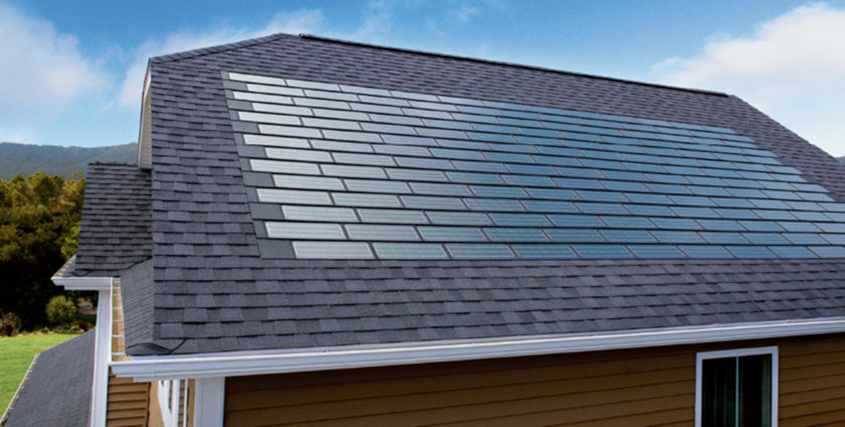
A Tesla Solar Roof is a complete roofing system, not an add-on solar array. The roof is built with tempered glass tiles designed to serve as both weather protection and an energy-producing surface. Active tiles generate electricity. Inactive tiles are installed in areas where energy production would be limited or where roof detailing requires non-producing sections.
That usually means the solar-producing tiles are concentrated on roof planes with better sun exposure, while inactive tiles are used around chimneys, vents, valleys, skylights, shaded sections, and less favorable orientations. From the street, the goal is a consistent roof appearance rather than the look of panels mounted over an existing roof material.
This distinction matters because the system should not be evaluated only by watts or panel count. A solar roof combines roofing performance, water protection, solar generation, electrical integration, service access, and long-term home planning. That is why these projects involve more design review than a basic rooftop panel installation.
It also helps to understand that not every square foot of roof becomes a power plant. The useful energy-producing area depends on geometry, shading, fire setbacks, roof features, and how much of the roof can practically face productive sun. A homeowner who expects every visible tile to generate electricity may misunderstand how the system is designed. The best proposals explain where active tiles go, why certain areas remain inactive, and how those choices affect annual production.
For homeowners already facing a roof replacement, the integrated approach can simplify decision-making. Instead of solving roofing, solar, and storage in separate phases, the property can be reviewed as one energy and envelope project from the start. That is often especially useful for Los Angeles properties with older roofs, visible front elevations, and long-term plans to electrify more of the house over time.
Why Tesla Solar Roof Design Stands Out on Los Angeles Homes
The main advantage most homeowners notice first is appearance. Standard solar panels can perform very well and are often more budget-friendly, but they sit above the roofing material and usually include visible racking, frames, and separate equipment layouts. Tesla Solar Roof is designed to keep the roofline cleaner and more integrated.
That can matter more in Los Angeles than in many other markets. Architectural styles vary widely across the region, from Spanish revival and mid-century homes to custom hillside properties, contemporary rebuilds, ADUs, and visible front-facing rooflines on higher-end homes. Some homeowners want solar power without making the roof look like two separate systems were layered together.
A lower-profile integrated look may also be easier to discuss with neighborhoods that care about visual consistency, though design approval is never automatic. In visible locations such as Pasadena, the Hollywood Hills, or coastal communities, appearance can carry nearly as much weight as energy output. Homeowners interested in the curb appeal side of the decision can also review the impact of Tesla Solar Roofs in LA.
Still, good design is not just about aesthetics. It is about matching the product to the house. A property with a large rear-facing roof plane may do very well with traditional panels, while a visible custom home that already needs reroofing may benefit more from the integrated option.
For example, a hillside home with a prominent roof visible from the street, neighboring properties, and an outdoor entertaining area may place a high value on a unified appearance. By contrast, a one-story ranch house with a broad rear roof plane hidden from curb view may gain very little practical benefit from paying more for an integrated system. That kind of side-by-side thinking helps keep the decision grounded in the actual property, not only in product marketing.
Planning a Tesla Solar Roof with Powerwall in Los Angeles?
Home Upgrade Specialist, CSLB #1031989 and CSLB #1055444, can review your roof, electrical panel, battery goals, and utility setup before you commit to a premium integrated system.
Request a Free EstimateCall or text (833) 446-6387 for a consultation in Los Angeles County or Orange County.
Durability, Fire Rating, and Southern California Conditions
Roof appearance is important, but roof performance matters more. In Los Angeles and Orange County, roofing materials have to tolerate strong UV exposure, repeated heat cycles, wind events, and in some areas elevated wildfire concerns. Tesla Solar Roof tiles are made from tempered glass and are intended to provide both weather protection and power generation.
Homeowners should review the current written proposal and manufacturer documentation for fire-rating, wind-rating, hail-rating, and warranty details before signing. In wildfire-prone areas, fire resistance may be a meaningful comparison point when evaluating roofing systems, but no roof material makes a property fireproof.
Durability should also be viewed in everyday conditions, not just extreme events. Southern California roofs spend much of the year under direct sun, and long-term UV exposure can be hard on conventional roofing materials. Homes near the coast may also have additional exposure to salt air and moisture. A premium integrated roof is often chosen by owners who plan to stay in the home and want a longer-horizon solution rather than a short-term replacement.
Ask direct questions about workmanship coverage, monitoring, service process, roof access, and what happens if another trade later needs to work on the roof. Those practical details matter as much as the product brochure.
It is also smart to ask how the installer handles underlayment, flashing transitions, penetrations, and edge details. Many roof failures begin at weak details rather than the field of the roof itself. In practice, a well-designed premium roof still depends on disciplined installation. A homeowner in a canyon area concerned about wind-driven debris may focus on different risk factors than an owner near the beach who is more concerned about long-term moisture and corrosion. The best comparison process takes local conditions seriously instead of assuming every Southern California home faces the same environment.
Why Powerwall Often Changes the Value of the Project
For many households, the battery strategy is what makes the roof more useful day to day. Solar production usually peaks during daylight hours, but Los Angeles homes often use the most electricity later in the afternoon and evening when cooling, cooking, lighting, laundry, and electronics overlap.
Pairing the system with Tesla Powerwall battery backup allows excess daytime production to be stored and used later. That can help reduce dependence on high Time-of-Use periods and can provide resilience during outages. Depending on the design, the battery setup may support only essential loads or a much larger share of the home.
This is where homeowner priorities matter. One family may only want refrigeration, lights, internet, garage access, and a few receptacles backed up. Another may want broader support for central air conditioning, kitchen loads, pool systems, home office circuits, or future EV charging. Those goals affect battery count, load calculations, backup panel design, equipment placement, and total project scope.
Battery planning should start with lifestyle questions. How often do outages affect your area? Do you work from home? Are there medical devices in the house? Do you expect to add a heat pump, induction cooking, or an EV charger in the next few years? A system that looks adequate on paper today may feel undersized once the home becomes more electric.
A simple example is a family in the San Fernando Valley that mainly wants evening bill reduction plus enough backup for refrigeration, lighting, internet, and a few bedroom circuits during summer outages. That may call for a very different battery design than a larger Westside home trying to keep mini-splits, kitchen appliances, office equipment, and security systems running during an extended interruption. The battery conversation should be specific, not generic.
Homeowners comparing storage options and current incentive timelines should also review the Tesla Powerwall rebate deadline update and the Tesla Powerwall 3 rebate guide for Los Angeles.
Roofing, Solar, Batteries, and Electrical Work Should Be Planned Together
A common mistake is treating roofing, solar, battery storage, and electrical upgrades as separate decisions. With a Tesla Solar Roof, these systems are closely connected. Roof geometry affects solar production. Electrical service capacity affects battery integration. Backup priorities affect circuit design. Utility interconnection affects schedule and approvals.
That is why many Los Angeles projects start with a whole-home review. A contractor may need to evaluate roof age, underlayment condition, attic access, existing service panel, utility provider, shading, gutters, skylights, vents, chimneys, and future electrification plans such as heat pumps paired with solar, electric appliances, or EV charging. A property moving away from gas can require a different design than one remaining mixed-fuel.
Consider an older Los Angeles house with aging roof decking, a dated electrical panel, and plans for an EV charger within two years. If the owner reroofs first and thinks about battery storage later, they may create duplicated labor, permitting delays, or an electrical layout that no longer fits the future plan. Coordinated design helps reduce that kind of rework.
Home Upgrade Specialist can coordinate roofing, solar, batteries, and electrical timing so one upgrade does not create unnecessary conflicts later. Homeowners comparing a single contractor for connected systems can also review the HVAC, solar, roofing and battery company guide.
A practical step-by-step approach usually looks like this: first, review roof condition and structural needs; second, analyze solar exposure and annual consumption; third, identify backup priorities and future large electrical loads; fourth, confirm whether a service-panel upgrade or subpanel changes are required; and fifth, sequence permits, utility paperwork, and installation around those findings. When these steps happen in the right order, the final system is more likely to support how the household actually lives.
Tesla Solar Roof vs Traditional Solar Panels Plus Roof Replacement
A Tesla Solar Roof is not automatically the best answer for every house. The right path depends on roof condition, design priorities, budget, and long-term ownership goals. If the current roof is still in strong condition, removing it for a solar roof is often hard to justify. In that case, traditional solar panels over the existing roof may be the smarter fit.
If the roof is near the end of its life, the comparison becomes more interesting because reroofing costs should be included anyway. At that point, it makes sense to compare an integrated solar roof against a separate reroof plus conventional solar package, rather than comparing only the solar equipment by itself.
A helpful way to decide is to ask what problem you are trying to solve. If your top priority is the lowest cost per watt, traditional panels often win. If your priorities are replacing a failing roof, avoiding the look of mounted panels, and planning battery integration from day one, Tesla Solar Roof may deserve serious consideration.
One useful comparison exercise is to price the full project both ways. Scenario one might include removing and replacing the existing roof, then adding standard solar panels and optional battery storage. Scenario two might include the integrated solar roof, battery equipment, and any related electrical work. Looking at complete project numbers, rather than isolated equipment pricing, gives homeowners a more accurate view of value. It also prevents the common mistake of comparing a premium all-in-one system against only the solar portion of a separate reroof-and-panel plan.
Practical Checklist Before You Move Forward
Roof condition
If the roof is near the end of its life, an integrated replacement becomes easier to justify.
Energy target
Review the last 12 months of utility bills and estimate how much annual use you want to offset.
Backup loads
Decide whether you want essentials-only backup or a broader whole-home battery strategy.
Permits and utility rules
City approvals, inspections, and LADWP or SCE interconnection can affect scope and schedule.
Also ask early about skylights, attic equipment, gutters, roof penetrations, service-panel age, and any known leaks. These details often influence layout, labor, and sequencing more than homeowners expect. Bringing bills, outage priorities, and future upgrade plans into the first consultation usually leads to a more accurate proposal.
It can help to organize your first consultation like a mini project briefing. Gather the last 12 months of utility bills, photos of the roof if available, a list of planned home upgrades, and notes about any leak history or roof repairs. If you know you want an EV charger, heat pump, pool equipment, or home office backup, say so early. Small planning details at the beginning often prevent expensive design revisions later.
Permits, LADWP or SCE Planning, and Installation Sequencing
In the Los Angeles area, a Tesla Solar Roof project involves more than choosing a product. Depending on the property, there may be city permit review, structural review, electrical review, inspections, and utility interconnection steps through LADWP or SCE. Project timing can also be affected by roof complexity, weather, service-panel upgrades, and equipment coordination.
Installation is more involved than standard solar because the process includes removing the old roof, preparing the roof deck, installing the integrated roofing system and coordinating electrical or battery components. On-site duration and the full path to permission to operate vary by roof geometry, access, weather, material availability, permit review, inspections, utility coordination and design revisions. The written proposal should separate field-installation time from the full approval timeline.
The pre-construction phase is often just as important as installation. Measurements, site review, design work, permit submissions, utility paperwork, and equipment planning all happen before the first tile is placed. If the house needs electrical upgrades or structural corrections, that work may need to happen first. Homeowners preparing ahead of rainy weather can also review this Los Angeles roof preparation checklist.
A realistic timeline should account for permit review, inspections, utility paperwork, possible design revisions, and final approval, not only the days crews are working on the roof.
What to Ask When Comparing Solar Roof Quotes
Use the same questions with every proposal so you compare design quality, not only headline price. A lower number may leave out electrical work, battery equipment, or roof details that another quote includes.
- Which roof planes will use active solar tiles and which will use inactive tiles?
- How are skylights, vents, valleys, flashing, gutters, and future service access handled?
- Does the quote include Powerwall, Gateway, Backup Switch or other approved control equipment, a backup-load panel and any service-panel work?
- What utility paperwork is included, and what remains the homeowner's responsibility?
- What roof, solar, battery, and workmanship warranty documents will be delivered at closeout?
- How are change orders handled if hidden roof damage is discovered after tear-off?
- Is future electrification discussed, including EV charging, heat pumps, or other large loads?
It is also reasonable to ask who performs roofing versus electrical work, how monitoring is explained, and what support process applies after installation. These questions can reveal whether a company is offering a coordinated project or simply presenting equipment.
Another best practice is to ask for production assumptions in plain language. If one quote estimates much higher output than another, ask why. Is the difference caused by roof-plane assumptions, shading, equipment sizing, or simply more aggressive forecasting? A professional proposal should be able to explain the numbers clearly. Homeowners should also ask whether accessory items such as drywall repair after electrical work, conduit routing preferences, and final equipment locations are already included or likely to become change orders.
Compare Today’s Tesla Solar Options for Your Los Angeles Home
If the integrated Solar Roof concept originally interested you, Home Upgrade Specialist can now compare Tesla Solar Panels, Powerwall, conventional roof replacement and other current solar-plus-battery options around your roof, energy use and backup goals.
Schedule Your Free EstimateCall or text Home Upgrade Specialist at (833) 446-6387.
Frequently Asked Questions
How should I compare Solar Roof with current options?
Use Solar Roof as historical comparison context. For a new project, compare a conventional solar-ready roof plus current solar panels and Powerwall against the goals that originally made Solar Roof attractive. If the existing roof is newer and in strong condition, standard solar panels may be the more practical path.
Can Tesla Solar Roof be paired with Powerwall?
Yes. Many homeowners pair the roof with Powerwall so daytime production can support evening use and outage backup. Backup-load planning should be discussed before final electrical plans are approved. You can also review Powerwall backup planning and Tesla Gateway planning.
Can Powerwall be added later?
In some cases, yes. However, many homeowners prefer to plan for storage from the start because early design can improve equipment placement, backup circuit layout, permits, and possible panel upgrades.
Will I need an electrical panel upgrade?
Some homes do. That depends on existing service capacity, solar and battery design, backup loads, EV charging plans, and future electrification. Older Los Angeles homes often need a closer review.
How do I know whether my roof gets enough sun?
A site assessment should review roof orientation, pitch, shade from trees or nearby structures, and the effect of skylights, vents, and other obstructions. Shade analysis is one of the most important parts of determining whether an integrated solar roof is a strong fit.
How long should I expect the planning process to take?
That varies by roof complexity, permitting jurisdiction, utility coordination, and whether panel or structural upgrades are needed. The visible installation period may be relatively short, but the full project timeline usually includes design, approvals, scheduling, inspections, and utility signoff.
Related Los Angeles Solar Roof and Powerwall Resources
Homeowners who want to continue comparing options can use these service and planning pages:
- Tesla Solar Roof service overview
- Tesla Solar Roof Los Angeles guide
- Los Angeles roofing contractor
- Roof replacement before solar
- Tesla Powerwall installation
- EV charger installation
- Heat pump and solar planning
- LADWP solar and battery guide
- Los Angeles solar battery rebate stacking guide
- Federal solar tax credit status for LA homeowners
- SGIP battery rebate planning in Los Angeles
- Request a free estimate
For homeowners who want one team to review roofing, solar, batteries, electrical work, EV charging, and HVAC planning under a whole-home strategy, Home Upgrade Specialist can help evaluate the tradeoffs based on your property and goals.
Plan your home energy project with one team
Compare scope, equipment and utility rules in a single written plan built around your address.
Start My Home Plan