
On this page
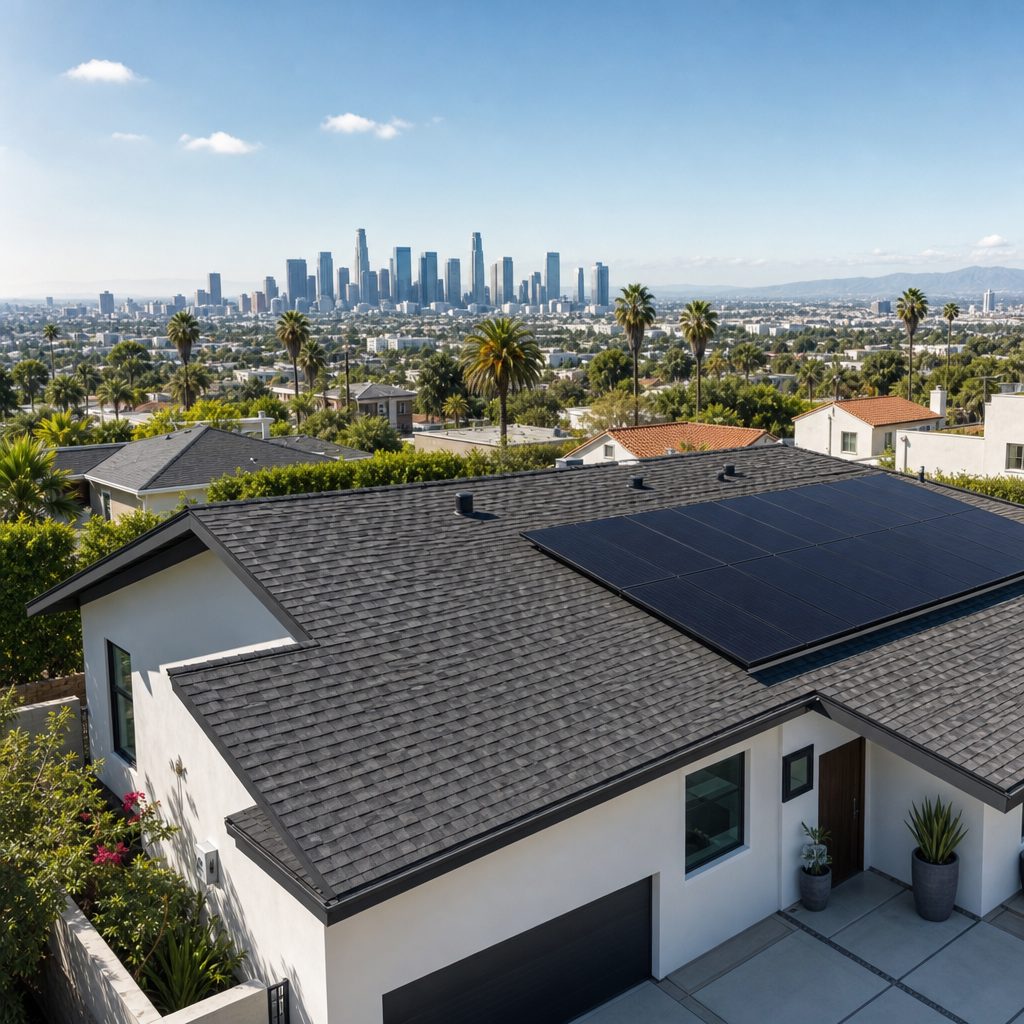
If your roof is near the end of its life, has active leaks, damaged underlayment, failing flashing, broken tiles, or soft decking, it is usually smarter to replace or repair the roof before installing solar. In Los Angeles, where permits, utility interconnection, roof types, wildfire concerns, and long-term home value all matter, project sequencing can save money and reduce future disruption. For many homeowners, the best path is a coordinated roofing and solar plan rather than treating them as separate jobs.
This guide is for homeowners in Los Angeles and nearby Southern California communities including Beverly Hills, Santa Monica, West Hollywood, Sherman Oaks, Encino, Glendale, Culver City, Manhattan Beach, Pasadena, Pacific Palisades, Brentwood, Bel Air, North Hollywood, Hollywood, Malibu, and Orange County. Home Upgrade Specialist provides roofing and roof replacement in Los Angeles plus solar, Tesla Solar Roof, Powerwall, battery, electrical, and HVAC coordination under CSLB #1055444. Compare the 2026 Los Angeles roof replacement cost guide, call (833) 446-6387, or start a Free Estimate. Final recommendations should follow an in-home or virtual assessment.
Get a Roof and Solar-Ready Plan Before You Commit
We can inspect roof condition, solar layout, Tesla Solar Roof options, Powerwall planning, permits, and electrical needs together.
Why roof condition matters before solar
Solar panels are designed to stay in place for decades. If the roofing system beneath them fails early, the panels may need to be removed so the roof can be repaired or replaced. That means extra labor, new waterproofing work, and another round of coordination between trades.
Los Angeles homes add a few extra variables. Many properties have tile roofs, low-slope sections, older decking, patchwork repairs, or past additions. Some homes also need electrical panel upgrades before solar, and some owners want to add battery backup, heat pumps, insulation, or window upgrades at the same time. Looking at the house as one integrated system can produce a cleaner result.
How to evaluate whether your roof should be replaced first
Start with age. Asphalt shingle roofs nearing the end of their expected life often should be addressed before panel installation. Tile roofs may last longer on the surface, but the underlayment beneath the tile can wear out much earlier. If a roof looks acceptable from the street, that does not necessarily mean it is solar-ready.
Next, look at performance. Water stains in the attic, ceiling discoloration, repeated patch repairs, or visible sagging all deserve attention. Solar installers need secure attachment points, and those mounts depend on the condition of the rafters, sheathing, and surrounding roofing materials.

Key items a Los Angeles homeowner should review
- Roof age and approximate remaining service life
- Leaks, stains, mold, or signs of trapped moisture
- Condition of decking or sheathing under the roof covering
- Underlayment age, especially under tile roofs
- Broken, curling, slipping, or brittle shingles
- Cracked, loose, or displaced tile
- Flashing at valleys, chimneys, skylights, vents, and walls
- Structural suitability for solar mounting
- Roof geometry, shading, and usable solar area
When solar can go on an existing roof
Not every roof needs replacement first. If the roof is relatively new, structurally sound, dry, and in good condition, solar may be installed without major roofing work. A focused repair may be enough if the issue is limited and does not affect future mounting or waterproofing.
For example, a newer composition roof with solid sheathing and good flashing may be a strong candidate for solar. A concrete tile roof may also work if the tile and underlayment are still performing well and the mounting plan accounts for proper flashing and attachment details.
Signs your current roof may be solar-ready
- Roofing system still has substantial remaining life
- No active leaks or chronic repair history
- Decking is sound and attachment points are reliable
- Flashing details can be integrated correctly
- Roof slope, orientation, and shading support production goals
Solar panels on an old roof: what can go wrong
Putting solar on an old roof can create avoidable complications. If the roof needs replacement a few years later, the solar array usually has to be removed and reinstalled. Homeowners then face labor, storage, scheduling, and inspection issues, along with time when the system is offline. That disruption can also affect battery planning if a Powerwall or other storage system is tied into the same project timeline.
Older roofs can also have hidden issues. During attachment, crews may discover deteriorated decking, weak nail-holding capacity, brittle roofing materials, or outdated details around vents and transitions. Those discoveries can delay permits and installation.
Common reasons removal and reinstall becomes necessary
- End-of-life shingles or underlayment
- Leaks near future panel zones
- Broken tile and failing waterproofing layers
- Decking damage found during roof or solar work
- Major remodels or structural corrections
Roofing material choices and solar readiness in Los Angeles
Different roof systems interact with solar in different ways. Composition shingles are common and usually straightforward for attachment. Tile roofs can work well, but attachment methods, flashing details, and tile replacement planning need care. Low-slope roofs require special attention to waterproofing and layout. If you are replacing a roof specifically because you want solar, ask whether the new system is being designed as solar-ready.
Solar-ready roofing usually means the new roof is selected and detailed with future panel placement in mind. That can include preserving open roof space, upgrading underlayment where needed, planning pathways, and thinking through vent locations so the panel layout is not compromised later.
Tesla Solar Roof vs. traditional solar panels
If your roof already needs full replacement, some Los Angeles homeowners compare a conventional new roof plus solar panels with a Tesla Solar Roof. The right choice depends on roof complexity, appearance goals, usable solar area, budget priorities, and the overall scope of the home upgrade.
Traditional solar panels are mounted on top of a separate roof system. Tesla Solar Roof combines roofing and solar into one integrated product. On some homes, that can simplify aesthetics. On others, a standard roof plus panel system may offer more flexibility. Compare the current Tesla Solar Roof Los Angeles 2026 cost and installer guide before choosing. Either way, the decision should account for battery timing, electrical infrastructure, and permitting, not just appearance.
Battery timing, electrical panels, and project sequencing
Roof and solar decisions are often tied to electrical work. A home may need a main service panel upgrade, subpanel work, or backup load planning before adding solar and batteries. If you are considering a Tesla Powerwall or Enphase battery, it is usually wise to discuss that early instead of treating storage as an afterthought.
Good sequencing often looks like this: evaluate roof condition first, confirm the electrical pathway, complete required reroofing or repairs, then install solar, battery equipment, and final system monitoring. If HVAC upgrades such as a heat pump are also planned, that can affect system sizing and panel capacity. Homeowners comparing integrated services can review roofing and solar coordination in Los Angeles or broader roofing, solar, and battery project planning in Los Angeles.
Homeowner checklist before approving solar on your roof
- Ask for a roof condition assessment, not only a solar proposal
- Confirm age and expected life of roofing materials and underlayment
- Review decking condition and any structural concerns
- Ask how flashing and waterproofing will be handled at each attachment point
- Discuss future panel removal and reinstall risk if the roof is older
- Check whether an electrical panel upgrade is needed
- Consider battery placement and backup goals early
- Make sure permits and utility interconnection sequencing are understood
Permits, inspections, and utility interconnection in Los Angeles
Roof replacement before solar is not only a construction question. It also affects permits, inspections, and utility timelines. Depending on the project scope, roofing, electrical, solar, and battery work may each involve separate reviews or coordinated approvals. A thoughtful plan helps reduce rework and keeps one trade from waiting on another.
Utility interconnection also takes time. If the roof is being replaced, it is generally better to resolve that first rather than pushing solar documentation through only to pause for roofing issues. For homes in Los Angeles and surrounding areas, a coordinated contractor can help simplify communication across scopes, but the exact process still depends on the property and utility requirements.
Get a roof-and-solar plan before you commit
If you are deciding between reroofing, solar panels, Tesla Solar Roof, battery storage, or panel upgrades, the smartest next step is a property-specific assessment. Home Upgrade Specialist serves Los Angeles and Southern California. Call (833) 446-6387 or request a free estimate.
Related Los Angeles roof, solar and battery planning guides
Use these guides to compare roof timing with solar panels, Tesla Solar Roof, Powerwall, incentives and whole-home energy planning.
- Tesla Powerwall 3 incentive guide for Los Angeles homeowners
- Federal solar tax treatment status for 2026 projects
- Tesla Solar Roof design and Powerwall guide
- Tesla Solar Roof vs solar panels in Los Angeles
- Solar panel installation in Los Angeles
- Los Angeles solar hub
- Solar panel cost in Los Angeles
- Roofing contractor services in Los Angeles
- Solar panels on tile roofs
- Solar panels on flat roofs
- Solar panels on metal roofs
- Solar for older homes
- Solar-ready roofing
- Best HVAC, solar, roofing and battery company in Los Angeles
- LA roof inspection checklist
- Westside solar
- San Fernando Valley solar
- South Bay solar
- San Gabriel Valley solar
FAQ
1. Do I need to replace my roof before solar?
If the roof is old, leaking, or has limited remaining life, replacing it first is usually the safer and more cost-conscious decision.
2. How old is too old for solar panels?
There is no single age cutoff, but roofs with less than roughly a decade of dependable life remaining often deserve closer review before solar.
3. Can solar panels be installed on tile roofs?
Yes, many tile roofs can support solar, but the underlayment, tile condition, and attachment details need careful evaluation.
4. What if my roof leaks after solar is installed?
You should contact the responsible contractor promptly. The source may involve flashing, roofing, or unrelated roof aging, so diagnosis matters.
5. Is Tesla Solar Roof better than regular solar panels?
Not always. It depends on whether you already need a new roof, your design priorities, roof complexity, and the rest of the project scope.
6. Should I install a battery at the same time?
Often yes, especially if backup power is a priority. Planning battery storage early can improve electrical design and equipment placement.
7. Will I need an electrical panel upgrade?
Some homes will. The answer depends on existing service capacity, code requirements, and whether you are also adding HVAC or EV charging loads.
8. Who is this page for?
This guide is for Los Angeles and Southern California homeowners planning roofing and solar work and wanting practical next-step criteria before moving forward. For a free estimate, contact Home Upgrade Specialist.
Plan your home energy project with one team
Compare scope, equipment and utility rules in a single written plan built around your address.
Start My Home Plan